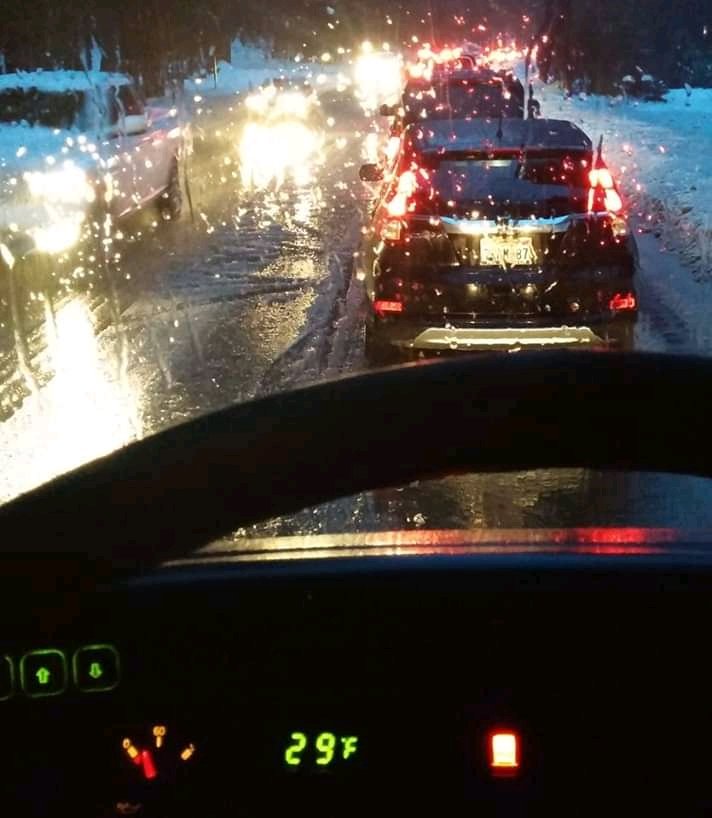
It’s that time of year again. If you are facing a trip and snow is threatening here are some things to remember.
After the TV and Radio weather reports here are some additional places to get information.
Check Google Maps https://www.google.com/maps/ to see road closures or blockages along your route.
Check CALIFORNIA DOT. https://dot.ca.gov/travel
Enter Highway numbers to see if there are specific closures along your planned route. This will also tell you if there are chain restrictions and where they are located.
Nevada Roads is also a great resource and sometimes has better information than CA DOT. These sites include live cameras to get a live look at current conditions.
Go to the site and focus on your area of interest then save the site to your home screen. When you need to check its easy to find it on your phone and quickly check in as the day goes on.
https://myradar.com/ is the best Live Weather app. This will show you where the weather cells are NOW, whether it is raining or snowing. It will also show how fast and in what direction the cells are moving. It also will show you where the snow line is at any moment. Highly accurate data.
This can help you decide to try to outrun a cell headed you way or to wait for the cell to pass then drive in the drier skies behind the moving cell.
Special Equipment for Winter Weather.
chain installation demonstration.
Additional consideration for chain installation and removal.
Its’s much easier to install chains when the road surface is either frozen solid or simply wet. A 4×4 piece of cardboard or a large plastic garbage bag should be carried near the chains for reaching under the bus.
When setting the inside hook into the links it is good to take as many links as possible for a good tight final fit. If you hook onto the first link you reach, chances are the chains will have a sloppy fit and slap at the fenders of the bus. Best to have the chains tight before the bunjis go on. This will also provide a more quite ride with a secure feel for the driver and passengers.
In extreme conditions a third chain can be added to the passenger side front wheel to aid in breaking and to prevent the front of the bus from sliding off the road onto the shoulder.
Some drivers use a colored cable tie at the main connecting link to help stop the bus where the hooks can be undone.
When installing chains, use a bungi cord between the outside chain ends to prevent the chains from falling between the dual tires. This is both at installation and removal. This problem will put you out of service till you can remove them.
After draping the chains over the rear wheels, do not drive the bus too far. Just drive far enough to attach the hooks close to the tire where it hits the ground. If you drive too far you will have to reach up under the bus, between the wheels and under the fender where the hooks and links may be out of site. If the hooks are close to the ground all the links can be seen without groping in the dark.
If you are headed up to the pass and chains are required, it is better to chain up a few miles ahead of the check station where the road i.s NOT 10 inches deep in slush. Waiting till the last minute may put you in the transition zone where the road is a cold sloppy slush. Same is true coming down off the mountain. If you stop in the transition zone there can be a nasty deep slush making it wet getting under the bus to unhook the chain’s inside hook. It’s ok to drive with chains at under 20 MPH on wet pavement to get to a safe spot to remove them.
It’s also good to have a waterproof jacket, pants, gloves and boots. If I know I’ll be chaining, up I’ll drive with the waterproof pants on. This should be part of your winter driving kit even if you don’t expect to chain.
Think of what you would want to have if you had to spend a night on the bus. Beef Jerkey and trail mix and water will get you through 24 hours.
A blanket, pillow and charge cord for your phone or a back up cell phone battery could also be good. If you have a winter kit you may want to consider these items:
- Metal coat hanger for chain repair
- S Hooks, Spare chain links
- Chain Cam tool.
- Cable chains (not approved for Hwy 50)
- Vice Grips, Pliers, screw driver
- Pry Bar
- Flashlight or Headlamp
- Warning Strobe light
- Dry socks or a change of clothes. (not cotton)
Cell Phones in the mountains
Cell phones work a lot harder in the mountains and burn through batteries faster than in town. They are burning more power to reach distant towers and the cold weather also burns them down faster.
If you are using you smartphone’s navigator you should download a map that can be used offline in the areas you are traveling to.
This is in your Google Maps main menu under Offline Maps.
Select the area you are traveling to and download in an area with WIFI. These must be renewed every few months. You can have extra maps for San Francisco, Reno, Tahoe, Los Angeles etc.
Especially important for Yosemite.
When there are cell towers nearby the phone can access maps off the internet, but no data connection means your google maps will not work. So no you cant talk and you cant see where you are.
Think ahead.
Have an extra cell phone battery in case your 12 volt system fails.
Have a basic idea of where you need to go if your cell phone fails completely or ask a passenger to plug in destination to their phone to help in emergency.
 Smooth Operators
Check in with dispatch and group leaders when snow closures are possible. Departure times may change and groups may alter plans or destinations.
LikeLike